
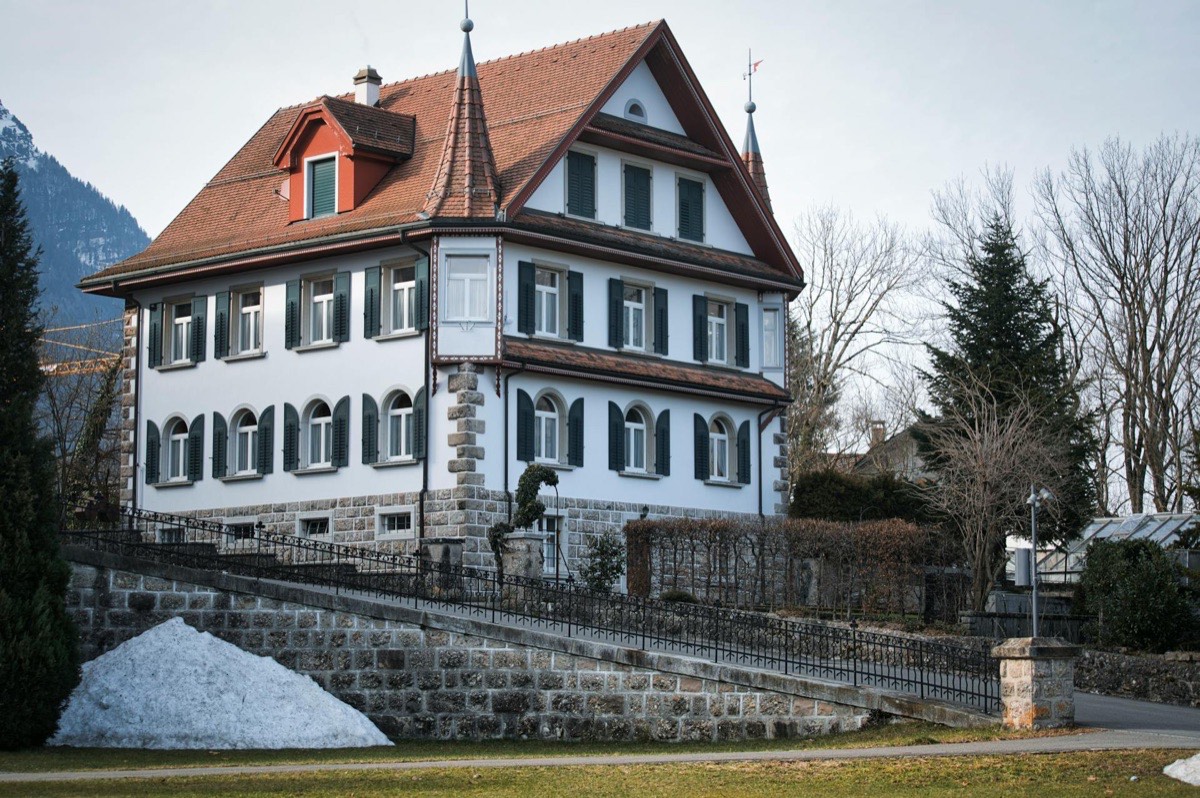
Switzerland's lump sum taxation regime—formally known as expenditure-based taxation or forfait fiscal—represents one of Europe's most sophisticated preferential tax arrangements for high-net-worth individuals. Unlike ordinary taxation based on worldwide income and wealth, lump sum taxation in Switzerland calculates your tax liability based on annual living expenses rather than actual income. This unique system has attracted wealthy retirees and internationally mobile individuals for decades, though recent reforms have tightened eligibility and increased minimum thresholds. Understanding whether this regime suits your circumstances requires examining eligibility criteria, calculation methodologies, cantonal variations, and strategic implications.
Eligibility Requirements for Lump Sum Taxation
Switzerland's expenditure-based taxation system imposes strict eligibility criteria designed to attract internationally mobile wealth holders. The federal framework establishes baseline requirements, whilst cantons maintain discretion to impose additional restrictions.
Primary Eligibility Criteria:
You cannot be a Swiss citizen. The regime exclusively targets foreign nationals establishing Swiss tax residency. If you hold Swiss citizenship, you lose eligibility immediately. This restriction extends to dual nationals—any Swiss citizenship disqualifies you.
You must not pursue gainful employment in Switzerland. The regime targets retirees and investors living on passive income. You cannot work for a Swiss employer or operate a Swiss business. However, you may maintain international business activities, board positions, and investment management outside Switzerland. Managing your own wealth or serving on foreign company boards generally remains permissible, though interpretations vary by canton.
You must establish genuine Swiss tax residency for the first time or after prolonged absence. If you previously held Swiss tax residency under ordinary taxation within the past ten years, most cantons will not grant lump sum status.
Minimum Spending Thresholds:
Federal law mandates minimum lump sum tax calculations. Since 2016, the tax base cannot fall below CHF 400,000 annually. However, many cantons impose higher minimums—Geneva requires CHF 500,000, whilst Vaud mandates CHF 450,000. These thresholds represent deemed annual living expenses, not actual tax payment.
Lump sum taxation becomes financially attractive only for individuals with substantial wealth generating passive income exceeding several million Swiss francs annually. The regime suits retirees with significant investment portfolios or royalty income.
Tax Calculation Formula and Methodology
Lump sum taxation in Switzerland operates through expenditure-based calculation rather than traditional income-and-wealth assessment. Tax authorities determine your deemed annual living expenses, then apply standard federal and cantonal tax rates to this imputed base.
The Expenditure Multiplier System:
The core calculation starts with your annual living expenses. Tax authorities assess this based on rental costs, applying a multiplier ranging from five to seven times your annual rent. If you own your residence, authorities impute a rental value based on comparable properties.
For example, if you rent a lakeside apartment in Geneva for CHF 60,000 annually, your deemed living expenses might be CHF 60,000 × 7 = CHF 420,000. However, since Geneva's cantonal minimum stands at CHF 500,000, authorities would apply this higher threshold. You then pay standard Geneva tax rates on this CHF 500,000 base.
Federal and Cantonal Tax Application:
Once your tax base is established, you pay both federal and cantonal/communal taxes at ordinary rates on this deemed expense figure. This differs from a single flat rate—you remain subject to progressive rate structures, but only on the expenditure base rather than actual worldwide income.
Federal tax on CHF 500,000 might amount to approximately CHF 20,000–25,000. Cantonal and communal taxes vary by location, with total effective rates typically ranging from 15% to 25%.
Minimum Thresholds:
Your lump sum tax base cannot fall below seven times your rental expenditure, your actual worldwide income from Swiss sources, or CHF 400,000 (federal minimum since 2016). Most cantons impose their own higher minimums.
Sample Calculation Scenarios:
| Annual Rent | Canton | Multiplier | Calculated Base | Canton Minimum | Final Tax Base | Approx. Total Tax |
|---|---|---|---|---|---|---|
| CHF 50,000 | Vaud | 7× | CHF 350,000 | CHF 450,000 | CHF 450,000 | CHF 75,000–90,000 |
| CHF 80,000 | Geneva | 7× | CHF 560,000 | CHF 500,000 | CHF 560,000 | CHF 100,000–120,000 |
| CHF 100,000 | Ticino | 5× | CHF 500,000 | CHF 400,000 | CHF 500,000 | CHF 65,000–85,000 |
| CHF 150,000 | Valais | 6× | CHF 900,000 | CHF 400,000 | CHF 900,000 | CHF 140,000–180,000 |
These approximations demonstrate how location and housing costs fundamentally shape your lump sum tax liability.
Wealth Tax:
Several cantons levy wealth taxes alongside income taxation. Under lump sum arrangements, wealth tax typically applies to Swiss-situs assets at ordinary rates, whilst foreign assets may benefit from reduced assessment.
Cantons Offering Lump Sum Taxation
Not all Swiss cantons permit lump sum taxation, and those that do maintain varying policies. The cantonal landscape has shifted considerably since 2016, when federal restrictions tightened and several cantons abolished the regime.
Cantons Permitting Lump Sum Taxation (2026):
Geneva mandates a CHF 500,000 minimum tax base with relatively high effective tax rates (18–22% typically). The canton attracts applicants seeking proximity to international organisations.
Vaud permits lump sum arrangements with a CHF 450,000 minimum. The canton's strong international school network and quality of life make it attractive.
Valais offers more competitive terms with the federal CHF 400,000 minimum and lower effective tax rates (12–16% in many communes), particularly in resort areas like Verbier.
Ticino provides Italian-speaking alternatives with CHF 400,000 minimums and competitive effective rates (13–17%). Lugano attracts applicants seeking Mediterranean climate.
Other cantons including Graubünden and Bern (selectively) continue permitting lump sum taxation with varying restrictions.
Cantons That Abolished Lump Sum Taxation:
Zürich (2009), Schaffhausen (2011), Basel-Stadt (2013), Basel-Landschaft (2015), and Appenzell Ausserrhoden (2013) eliminated lump sum taxation through popular referendums. These abolitions reflect political pressure regarding fairness rather than economic calculation.
Strategic Canton Selection:
Choosing the optimal canton requires balancing tax efficiency, quality of life, and stability. Lower-tax cantons offer savings but potentially limited infrastructure, whilst higher-tax locations like Geneva provide unmatched international connectivity.
Application Process and Timeline
Securing lump sum taxation status requires navigating a formal application process involving cantonal tax authorities, documentation, negotiation, and ongoing compliance. The process typically spans several months.
Initial Application:
Begin by engaging specialist tax advisors. Your advisor prepares a comprehensive submission demonstrating eligibility and proposed expenditure calculation. Key documentation includes proof of foreign nationality, evidence of non-employment status, rental documentation, financial statements, previous tax returns, and declaration of worldwide assets.
Negotiation:
Tax authorities propose an initial expenditure base calculation, often conservatively high. Your advisor negotiates this figure based on actual living costs. Expect multiple rounds of communication.
Approval:
Authorities issue a formal ruling confirming your lump sum status and tax liability. This ruling typically applies for five years. The process requires four to twelve months.
Ongoing Compliance:
Lump sum status requires periodic renewal. Material changes—beginning employment, acquiring citizenship, significant wealth changes—must be reported and may trigger re-assessment.
Advantages and Disadvantages of Lump Sum Taxation
Lump sum taxation in Switzerland offers distinct benefits whilst imposing meaningful limitations. Evaluating whether this regime suits your circumstances requires honest assessment of your financial situation.
Primary Advantages:
Tax certainty and simplification represent the most compelling benefits. Rather than annually declaring worldwide income and assets, you pay an agreed fixed amount. This dramatically reduces administrative burden for individuals with complex international income streams.
Privacy considerations provide additional appeal. Whilst authorities receive financial documentation during application, ongoing filings require minimal disclosure compared with ordinary taxation.
Competitive effective rates can emerge for high-income individuals with substantial foreign-source income. If your worldwide income significantly exceeds several million francs whilst living expenses remain moderate, lump sum taxation may produce lower absolute tax.
Wealth structuring flexibility enables sophisticated estate planning. Since authorities tax expenditure rather than income, you gain latitude in timing investment realisations.
Disadvantages and Limitations:
High minimum thresholds render lump sum taxation financially unattractive for moderately wealthy individuals. With minimum tax bases of CHF 400,000–500,000, you will likely pay CHF 65,000–120,000 annually. For someone whose worldwide income might ordinarily generate CHF 40,000–50,000 in tax, lump sum treatment proves economically counterproductive.
Employment restrictions eliminate the regime's suitability for active professionals. If you plan to work from Switzerland, ordinary taxation becomes mandatory.
Political risk creates uncertainty. Several cantons have abolished lump sum taxation recently, and federal reforms continue tightening eligibility. Future political shifts might eliminate the regime entirely.
Cantonal variation complicates planning. Each canton maintains distinct rules and minimums. Moving between cantons may require re-application or loss of status.
"Lump sum taxation suits genuinely international individuals with substantial passive wealth who value administrative simplicity and privacy over marginal tax savings. For those maintaining active business interests or moderate asset profiles, ordinary taxation with proper structuring typically proves more appropriate."
The regime works best for retirees with investment portfolios generating CHF 3–10 million annually and individuals valuing privacy over absolute tax minimisation. It proves less suitable for active professionals or those with moderate wealth under CHF 10 million.
Recent Policy Changes and Reforms
Switzerland's lump sum taxation regime has undergone significant evolution since 2010, with federal reforms tightening eligibility and several cantons eliminating the system entirely.
2012 Federal Reform:
Switzerland implemented stricter regulations effective January 2016. The reform established minimum federal tax base of CHF 400,000 (previously CHF 200,000–250,000), mandatory seven-times rental expense calculation, and enhanced reporting. These changes approximately doubled minimum tax liabilities, eliminating lump sum viability for moderately wealthy applicants.
Cantonal Abolitions:
Between 2009 and 2015, five cantons abolished lump sum taxation through popular votes. These abolitions reflected political positioning rather than economic necessity. Several cantons imposed stricter minimums—Geneva established CHF 500,000 whilst Vaud set CHF 450,000.
Ongoing Political Pressure:
Left-progressive parties continue advocating complete abolition. Regular parliamentary initiatives propose elimination, though centre-right majorities have blocked it. Cantons permitting lump sum taxation maintain support in regions where wealthy foreign residents contribute to local economies.
Compliance:
Switzerland's adoption of Common Reporting Standard means your Swiss residence triggers reporting to other tax jurisdictions. Lump sum status does not shield you from home country obligations.
Alternatives to Lump Sum Taxation
If lump sum taxation proves unsuitable, several alternative approaches enable tax-efficient Swiss residence whilst maintaining compliance with ordinary taxation.
Ordinary Taxation with Optimisation:
Standard Swiss taxation often produces competitive effective rates without lump sum restrictions. Switzerland's ordinary tax system offers competitive cantonal rates (15–25%), wealth tax predictability (0.3–0.8%), participation exemption on qualifying dividends, and extensive treaty relief.
For individuals with income under CHF 2–3 million annually, ordinary taxation in tax-competitive cantons like Zug or Schwyz often produces comparable tax liability whilst avoiding employment restrictions.
Partial Residence Strategies:
Switzerland permits limited tax residence for individuals spending fewer than 183 days annually, enabling Swiss residence permits whilst maintaining primary tax residence elsewhere. However, arrangements require careful structuring to avoid triggering full Swiss tax residence.
Holding Company Structures:
Wealthy individuals sometimes establish Swiss holding companies to own international assets. Under Switzerland's participation exemption regime, qualifying dividend and capital gain income benefits from tax relief. This enables wealth consolidation without lump sum status, though it introduces corporate governance obligations.
Frequently Asked Questions
Can I work remotely for a foreign company whilst under lump sum taxation?
Generally no. Swiss authorities interpret "gainful employment" broadly to include remote work for foreign employers. You may maintain board positions, but active employment typically violates eligibility requirements.
What happens if my circumstances change during lump sum status?
Material changes—beginning employment, acquiring citizenship, significant wealth variations—must be reported. Such changes may trigger re-assessment or termination of lump sum status.
Do I still pay taxes in my home country under lump sum taxation?
Lump sum taxation only addresses Swiss obligations. Most countries tax citizens on worldwide income regardless of Swiss treatment. You must evaluate home country obligations separately.
Can I convert from ordinary Swiss taxation to lump sum status?
Generally no. The regime targets newcomers establishing fresh residence. If you lived in Switzerland under ordinary taxation recently (typically within ten years), most cantons deny lump sum applications.
How does lump sum taxation affect inheritance planning?
Lump sum status does not alter Swiss inheritance tax treatment. Switzerland imposes no federal inheritance tax. Most cantons exempt direct descendants. Your lump sum status affects income taxation during life, not estate taxation at death.
Which canton offers the most favourable lump sum terms?
Suitability depends on your priorities. Valais and Ticino offer lower tax rates but potentially limited infrastructure. Geneva and Vaud command higher rates but provide unmatched international connectivity.
Conclusion
Lump sum taxation in Switzerland represents a sophisticated preferential regime enabling high-net-worth individuals to establish Swiss residence whilst paying expenditure-based taxation rather than ordinary income assessment. The system offers genuine benefits—administrative simplification, privacy advantages, and competitive effective rates—for individuals with substantial passive wealth.
However, recent reforms have significantly increased minimum thresholds. With minimum tax bases of CHF 400,000–500,000 producing annual tax liabilities of CHF 65,000–120,000 or more, the regime suits only genuinely wealthy individuals whose worldwide income substantially exceeds several million francs annually.
Political sustainability remains uncertain, with ongoing pressure for further restriction. Applicants must weigh tax efficiency against regulatory risk and employment constraints. For those meeting eligibility criteria with genuinely international wealth profiles valuing administrative simplicity, lump sum taxation continues offering meaningful advantages. For active professionals or moderately wealthy individuals, ordinary taxation in a competitive canton typically proves more practical.
For more information on ordinary Swiss tax treatment, see our guide on Switzerland tax rates explained. The Swiss Federal Tax Administration provides official guidance on lump sum taxation including current requirements.