
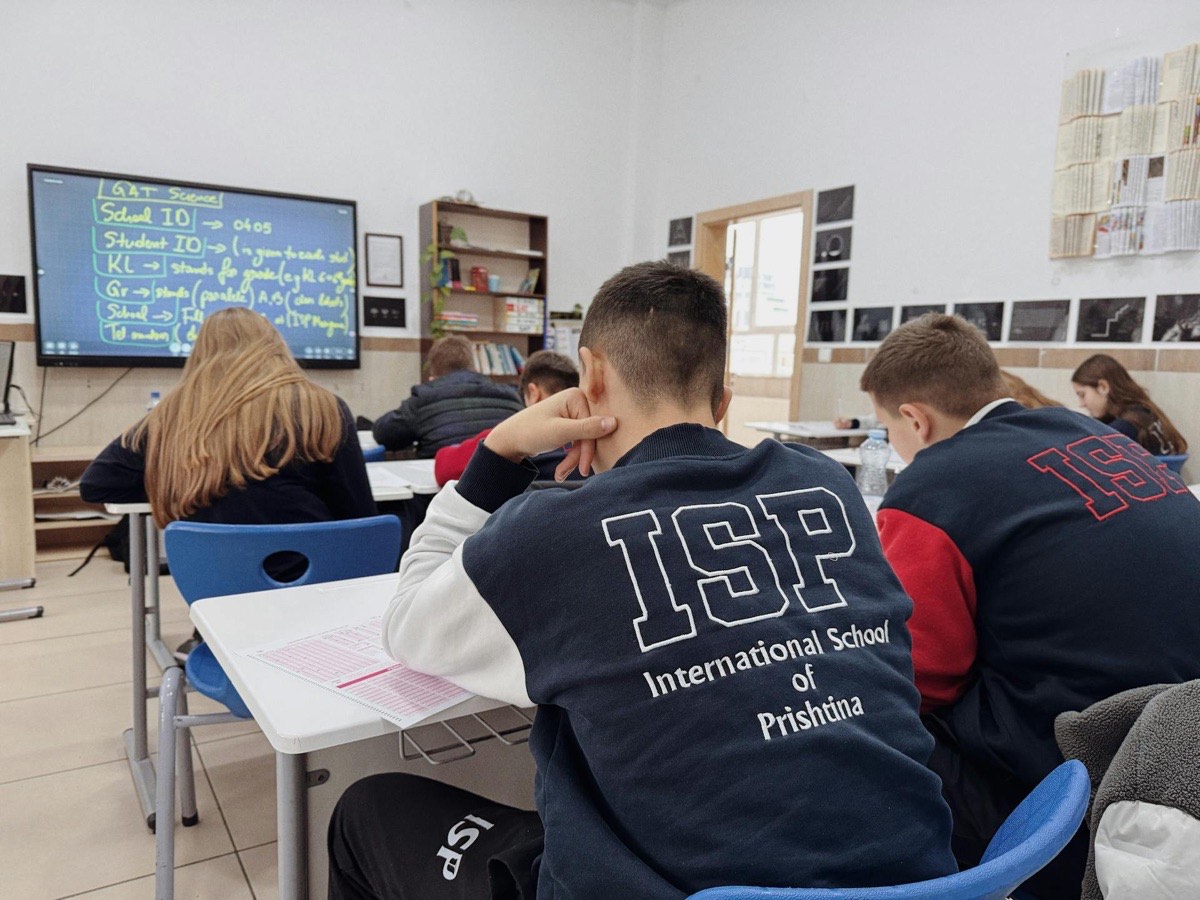
Choosing the right school for your children ranks amongst the most critical decisions when moving to Switzerland as an expat family. With over 100 international schools offering diverse curricula, languages, and educational philosophies, Swiss educational institutions cater to the country's substantial expatriate population—approximately 25% of residents. This guide demystifies the landscape of international schools in Switzerland, helping you navigate curriculum choices, understand admission processes, evaluate costs, and identify the best educational fit for your family's unique circumstances.
Understanding the Swiss Education System
Switzerland's education system operates primarily at cantonal level, resulting in 26 distinct educational frameworks with varying structures, languages, and requirements. Public schools typically teach in the local language—German, French, Italian, or Romansh—depending on the canton, making them challenging for non-native speakers arriving mid-education.
The Swiss public system divides into kindergarten (ages 4-6), primary school (ages 6-12), secondary I (ages 12-15), and secondary II (ages 15-19), with pathways splitting between academic gymnasium leading to university and vocational training programmes. Whilst excellent in quality, this structure emphasises local integration and language proficiency, creating barriers for children who haven't grown up within the system.
International schools emerged specifically to address these challenges for expatriate families, diplomatic personnel, and globally mobile professionals. These institutions maintain curricula recognised internationally, teach primarily in English (though many offer multilingual programmes), and facilitate smoother transitions for children who may relocate again within a few years.
Many cantons also provide "integration classes" (Aufnahmeklassen in German-speaking regions) within public schools, offering intensive language support for newcomer children. However, these typically suit families planning permanent settlement rather than those on temporary assignments of 2-5 years, where maintaining curriculum continuity matters most for future university applications.
Types of International School Curricula
Selecting the appropriate curriculum forms the foundation of your educational decision. International schools in Switzerland predominantly offer four main educational frameworks, each with distinct characteristics, philosophies, and outcomes.
International Baccalaureate (IB)
The IB programme, developed in Geneva specifically for international schools, represents the most globally recognised qualification. The framework divides into three age bands: Primary Years Programme (PYP) for ages 3-12, Middle Years Programme (MYP) for ages 11-16, and Diploma Programme (DP) for ages 16-19.
The IB emphasises inquiry-based learning, international-mindedness, and critical thinking rather than rote memorisation. Students in the DP study six subjects—three at higher level, three at standard—alongside the core elements of Theory of Knowledge, Extended Essay, and Creativity, Activity, Service (CAS). Universities worldwide recognise IB qualifications, with top institutions including Harvard, Oxford, and ETH Zurich accepting IB diplomas on par with or superior to national qualifications.
The rigour of IB suits academically motivated students comfortable with independent research and interdisciplinary thinking. However, the workload proves demanding, particularly during the DP years, requiring strong organisational skills and self-motivation.
British Curriculum
British curriculum schools follow the English National Curriculum or similar frameworks, culminating in IGCSEs (typically taken at age 16) and A-Levels (ages 16-18). This system emphasises subject specialisation, allowing students to focus on three or four subjects at A-Level that align with their intended university course.
British schools in Switzerland often follow a more traditional pedagogical approach than IB institutions, with structured learning, regular testing, and subject-specific expertise. The curriculum proves particularly advantageous for families planning to return to the UK or Commonwealth countries, or those targeting British universities where A-Levels remain the gold standard for admissions.
Many British international schools additionally offer the IB Diploma alongside A-Levels, providing flexibility for students whose university plans evolve during secondary education.
American Curriculum
American curriculum schools structure education around the US high school system, offering Advanced Placement (AP) courses in upper years. Students accumulate credits across various subjects, maintaining broader subject diversity than the British system but with less depth than IB or A-Levels in individual subjects.
The American approach emphasises continuous assessment through grade point averages (GPA) rather than final examinations, suiting students who perform better with ongoing evaluation. Extracurricular activities—sports, arts, community service—play a more prominent role in the educational philosophy than in European systems.
This curriculum proves ideal for families planning to return to the United States or apply to American universities, where admissions officers best understand the grading systems and qualification framework.
French Curriculum (Baccalauréat)
French international schools follow the French national curriculum leading to the Baccalauréat, particularly common in Romandie (French-speaking Switzerland). This rigorous, content-heavy system maintains strong mathematical and philosophical components, with teaching primarily in French.
The Baccalauréat carries particular weight for students planning to attend French universities or grandes écoles, where it's the expected qualification. However, the curriculum's intensity and language demands make it less suitable for non-francophone families unless committed to French language mastery.
Top International Schools by Canton
Switzerland's international schools concentrate in cantons with substantial expatriate populations and multinational company headquarters. Here's a canton-by-canton overview of notable institutions.
Zurich
Zurich International School (ZIS), located in Wädenswil, offers the full IB continuum (PYP, MYP, DP) for ages 3-18. With approximately 1,300 students from 60+ nationalities, ZIS provides extensive facilities including science laboratories, arts centres, and sports complexes. The school emphasises outdoor education and sustainability, with programmes integrating Swiss mountain environments.
Inter-Community School Zurich (ICS), situated in Zumikon, delivers both IB and American High School Diploma options. Founded in 1960, ICS serves 750 students with strong university counselling, particularly for US and UK institutions. The school's smaller size fosters close-knit community feeling whilst maintaining academic excellence.
Geneva
International School of Geneva (Ecolint), established in 1924 as the world's first international school, operates three campuses (La Grande Boissière, La Châtaigneraie, Campus des Nations) serving 4,500 students. The birthplace of the IB curriculum, Ecolint offers unparalleled heritage in international education, with multilingual sections in English and French.
Collège du Léman, located in Versoix, provides IB, French Baccalauréat, and Swiss Maturité options, alongside boarding facilities for students aged 8-18. With 2,000 students from 120+ nationalities, the school offers exceptional language programmes and university preparation across multiple systems.
Zug
International School of Zug and Luzern (ISZL) serves the cantons of Zug and Lucerne with two campuses offering IB programmes. The school's strategic location near multinational corporations (particularly in Zug's "Crypto Valley") attracts children of business executives and entrepreneurs, creating a diverse, internationally-minded community of 1,200 students.
Vaud
Brillantmont International School in Lausanne, one of Switzerland's oldest boarding schools (founded 1882), offers British curriculum IGCSEs and A-Levels to 100 students aged 13-18. The small size enables highly personalised education and university guidance, particularly benefiting students requiring additional support or those seeking intimate learning environments.
Aiglon College, nestled in Chesières-Villars at 1,250 metres altitude, combines British curriculum (IGCSE, IB) with expeditionary learning philosophy. Mountain expeditions form compulsory curriculum elements, fostering resilience and leadership through alpine challenges. Boarding-only for ages 9-18, Aiglon attracts families valuing character development alongside academics.
Basel
International School Basel (ISB) offers IB programmes (PYP, MYP, DP) to 1,300 students from 60+ countries. The school's proximity to the pharmaceutical and chemical industry hubs of Basel attracts children of Novartis, Roche, and other major employers. ISB provides strong STEM programmes whilst maintaining balanced arts and humanities offerings.
School Comparison Matrix
| School | Location | Curriculum | Ages | Annual Fees (CHF) | Notable Features |
|---|---|---|---|---|---|
| Zurich International School | Wädenswil, ZH | IB (PYP, MYP, DP) | 3-18 | 29,000-38,000 | Sustainability focus, outdoor education |
| Inter-Community School Zurich | Zumikon, ZH | IB, American Diploma | 3-18 | 28,000-36,000 | US university counselling |
| International School of Geneva | Geneva | IB (PYP, MYP, DP) | 3-18 | 25,000-37,000 | IB birthplace, three campuses |
| Collège du Léman | Versoix, GE | IB, French Bac, Swiss Maturité | 2-18 | 30,000-45,000 | Boarding available, trilingual |
| TASIS Switzerland | Montagnola, TI | IB, American Diploma, AP | 3-18 | 35,000-95,000* | Boarding, American foundation |
| International School Basel | Basel | IB (PYP, MYP, DP) | 3-18 | 27,000-35,000 | Strong STEM programmes |
| Institut auf dem Rosenberg | St. Gallen | IB, A-Levels, US Diploma, German Abitur | 6-18 | 130,000-150,000* | Ultra-premium, individualised |
| ISGL Lausanne | Lausanne, VD | IB (PYP, MYP, DP) | 3-18 | 24,000-32,000 | Lakeside location |
| Brillantmont International School | Lausanne, VD | IGCSE, A-Levels | 13-18 | 75,000-85,000* | Small boarding school |
| Aiglon College | Villars, VD | IGCSE, IB | 9-18 | 95,000-125,000* | Mountain expeditions, boarding only |
*Includes boarding fees
Navigating the Admission Process
Securing places at competitive international schools in Switzerland requires strategic planning and understanding of timelines, particularly for families relocating mid-academic year.
Application Timeline
Most international schools operate rolling admissions, accepting applications year-round, but availability fluctuates significantly. For September starts (the primary intake), begin applications 12-18 months in advance for popular institutions. January intake points typically see more availability but fewer new students, potentially affecting your child's social integration.
Geneva and Zurich schools, particularly established names like Ecolint or ZIS, maintain substantial waiting lists for certain year groups—especially Reception, Year 7 (age 11), and Year 12 (IB Diploma start). Some families apply to multiple schools simultaneously to secure placement, then withdraw applications once their preferred choice confirms.
Required Documentation
Standard application packages include previous school reports (typically two years), teacher recommendations, birth certificate, passport copies, residence permit (or employment contract demonstrating relocation), and immunisation records. Some schools additionally request writing samples, particularly for secondary admissions.
Most institutions conduct entrance assessments, especially for students entering mid-primary or secondary levels. These tests evaluate academic readiness in mathematics, English language proficiency, and sometimes reasoning skills. Assessments aim to ensure appropriate class placement rather than serving as selective gatekeeping, though competitive schools do maintain academic standards.
Language Requirements
Whilst international schools in Switzerland predominantly teach in English, language proficiency expectations vary. Schools typically require non-native English speakers to demonstrate competency through assessments or standardised tests (TOEFL Junior, Cambridge English exams). Some institutions offer English as an Additional Language (EAL) support, but this shouldn't substitute for baseline conversational fluency.
For schools offering multilingual programmes or French/German curriculum options, corresponding language assessments apply. However, many international schools embrace linguistic diversity, viewing multilingualism as enrichment rather than barrier.
Waiting Lists and Alternatives
When facing waiting lists, maintain active communication with admissions offices, as circumstances change throughout the year with families relocating unexpectedly. Consider applying to multiple schools with varying admission competitiveness, including newer institutions that may have more immediate availability whilst offering equivalent educational quality.
Understanding Costs and Financial Considerations
International school fees in Switzerland represent substantial annual expenditure, though variation exists across institutions, locations, and included services.
Tuition Fee Ranges
Day school tuition typically ranges from CHF 20,000-45,000 annually, with early years programmes (ages 3-6) starting around CHF 20,000-28,000, rising to CHF 32,000-45,000 for secondary IB Diploma years. Boarding schools command significantly higher fees, from CHF 75,000-150,000+ annually including accommodation, meals, supervision, and activities.
Premium institutions such as Institut auf dem Rosenberg, Le Rosey, or Aiglon College charge CHF 100,000-150,000 annually, positioning themselves as ultra-luxury educational experiences with exceptionally low student-teacher ratios, individualised programmes, and extensive facilities.
Additional Costs
Beyond base tuition, budget for registration fees (CHF 500-3,000, typically non-refundable), building funds or capital levies (CHF 2,000-10,000 annually at some schools), uniforms (CHF 500-1,500), lunch programmes (CHF 2,000-4,000 annually), transportation/bus services (CHF 2,000-6,000), and extracurricular activities (CHF 1,000-5,000).
Examination fees for IGCSE, IB, or A-Levels add CHF 1,500-3,000 in final years. School trips, particularly at boarding schools offering international travel experiences, can add CHF 3,000-10,000 annually.
Financial Aid and Scholarships
Whilst less common than in some countries, several international schools in Switzerland offer means-tested financial aid or merit scholarships. Schools like Ecolint, TASIS, and Aiglon maintain financial assistance programmes covering 10-50% of fees for qualifying families. Corporate relocation packages from employers frequently include education allowances—negotiate these before accepting Swiss postings.
Tax Considerations
Swiss residents cannot typically deduct international school fees from cantonal taxes, unlike some countries permitting education expense claims. However, employer-provided education benefits may receive favourable tax treatment when structured correctly—consult Swiss tax advisors to optimise arrangements.
Selecting the Right Curriculum for Your Family
Curriculum choice should align with your family's long-term plans, your child's learning style, and likely university destinations rather than school reputation alone.
Future University Plans
If targeting UK universities, particularly Oxbridge or Russell Group institutions, British A-Levels provide advantage through subject specialisation and familiarity to admissions tutors. For US colleges, the American High School Diploma with strong AP courses and well-rounded extracurriculars aligns with holistic admissions approaches. IB Diploma maintains universal recognition, particularly valuable for families uncertain about future locations or students applying globally.
Career Pathway Considerations
STEM-focused students may thrive in IB programmes offering strong sciences whilst maintaining breadth, or British A-Levels permitting deep specialisation in Mathematics, Further Mathematics, Physics, and Chemistry. Arts and humanities students benefit from IB's interdisciplinary approach and Theory of Knowledge component, developing critical analysis skills valued by liberal arts colleges.
Students pursuing vocational pathways or uncertain about university might consider Swiss public system options leading to apprenticeships, though this requires strong local language skills and early commitment.
Learning Style Compatibility
Self-motivated, intellectually curious students flourish in IB's inquiry-based framework requiring independent research and time management. Structured learners preferring clear syllabi and defined content coverage may suit British or American systems better. Consider your child's organisational skills, response to examination pressure (IB concentrates assessment in final DP exams), and preference for breadth versus depth.
Continuity Considerations
If you've already started a curriculum elsewhere (British, American, IB), prioritise continuity when possible. Switching systems mid-secondary education creates unnecessary challenges, particularly between Year 10-11 when IGCSE courses begin or during IB Diploma years.
Boarding School vs Day School Decision
Switzerland's reputation for prestigious boarding schools attracts families worldwide, but the boarding-versus-day decision carries significant implications beyond logistics.
When Boarding Makes Sense
Boarding suits families where parents travel extensively for work, diplomatic postings precluding daily school runs, or situations where the nearest suitable international school exceeds reasonable commuting distance. Some Swiss cantons remain underserved by day international schools, making boarding the practical solution.
Educational philosophy also drives boarding choices. Institutions like Aiglon or Le Rosey explicitly integrate residential life into their pedagogical approach, viewing dormitory experiences, supervised study, weekend activities, and peer relationships as developmental opportunities equal to classroom learning.
Day School Advantages
Day schools preserve family time, daily routines, and parental involvement in education whilst reducing costs substantially. Children in day schools typically integrate more readily into local Swiss communities, developing friendships with both international school peers and neighbourhood children attending Swiss schools.
For younger children (under 13), most educational psychologists recommend day school attendance when feasible, as family bonds and home stability provide crucial developmental support during formative years.
Financial Comparison
Day school tuition of CHF 30,000 annually versus boarding fees of CHF 90,000-150,000 represents the starkest difference. However, factor in accommodation costs you'd incur anyway—if renting a family apartment in Geneva or Zurich costs CHF 36,000-60,000 annually, whilst boarding enables living in more affordable cantons, the actual differential narrows somewhat.
Public International School Alternatives
Not all internationally-minded education in Switzerland requires private school fees. Several cantons offer public bilingual or international programmes providing alternatives for budget-conscious families committed to longer-term Swiss residence.
Bilingual Public Schools
Zurich operates several bilingual public schools offering German-English instruction from primary levels, typically following Swiss curriculum but teaching subjects like mathematics and science in English. These programmes require lottery admission for oversubscribed schools but charge no tuition beyond standard cantonal fees.
Basel-Stadt and Zug similarly operate English-bilingual streams within public schools, though availability remains limited with waiting lists common. Children in these programmes typically need stronger local language skills than pure international schools, as playground language and integration classes occur in German.
International Sections in Public Schools
Geneva's public system includes sections internationales at select schools, offering British, American, or other curriculum options within public institutions. Whilst not entirely free (parents pay supplementary fees of CHF 3,000-6,000 annually), costs remain far below private international schools whilst maintaining quality instruction.
These sections suit families committed to remaining in Geneva long-term, accepting that community and facilities differ from premium private institutions. Academic standards remain high, with many students progressing to top Swiss and international universities.
Entrance Requirements and Realities
Public international options typically prioritise cantonal residents with established addresses, require lottery selection when oversubscribed, and may demand local language competency even for "international" programmes. Places for newcomer families, especially arriving mid-year, prove extremely limited.
"We initially budgeted for private international school but secured a place in Zurich's bilingual public programme through the lottery. Our children receive excellent English-German education whilst integrating into Swiss society properly. The money saved funds ski weekends and travel that enrich their Swiss experience beyond any campus facility could." — Rachel M., British expat mother of two, Zurich
Frequently Asked Questions
How early should I apply to international schools in Switzerland?
Begin applications 12-18 months before your intended start date for competitive schools in Geneva, Zurich, and Basel. Less subscribed institutions or newer schools may accommodate shorter timelines of 6-9 months. Mid-year entries typically find more availability than September intake.
Can my children attend public Swiss schools without speaking German/French?
Yes, through integration classes (Aufnahmeklassen) offering intensive language support, typically for 6-12 months before transitioning to regular classes. This works best for primary-aged children who acquire languages more readily. Secondary students face greater challenges, making international schools more practical for families on temporary assignments.
Do international schools in Switzerland teach local languages?
Most international schools include German or French instruction as mandatory subjects, typically 3-5 periods weekly from primary years onwards. However, proficiency levels achieved vary significantly—students typically reach conversational fluency but rarely native-level competency without additional immersion.
Are sibling priorities given for admissions?
Yes, nearly all international schools prioritise siblings of current students during admissions, both for family convenience and community continuity. Apply for younger siblings early to secure this advantage, as "sibling priority" typically means preference, not guaranteed placement.
What happens if we relocate mid-IB Diploma programme?
IB Diploma maintains global standardisation, allowing relatively seamless transfers between IB schools worldwide. Contact prospective schools early, as they'll need current coursework records and subject choices to ensure continuity. Some subject combinations may require adjustment if the new school doesn't offer identical options.
Conclusion
Selecting from the international schools in Switzerland involves balancing educational philosophy, financial realities, future university plans, and your family's unique circumstances. The country's exceptional international education landscape offers remarkable diversity—from prestigious century-old boarding institutions to innovative IB day schools and accessible public bilingual programmes.
Start your search early, visit multiple schools when possible to assess culture and community fit beyond glossy brochures, and prioritise curriculum alignment with your long-term plans over reputation alone. Whether choosing British A-Levels in a lakeside Vaud school, IB Diploma in cosmopolitan Geneva, or American curriculum in corporate Zug, Switzerland's international schools provide world-class education preparing globally-minded graduates.
Most importantly, remember that whilst school choice matters significantly, your family's adaptation to Swiss life, maintenance of home language and culture, and creation of balanced expatriate experience matter equally. The best international school is one that not only educates your child academically but also supports your whole family's successful Swiss journey, creating memories and competencies that endure long after repatriation.