
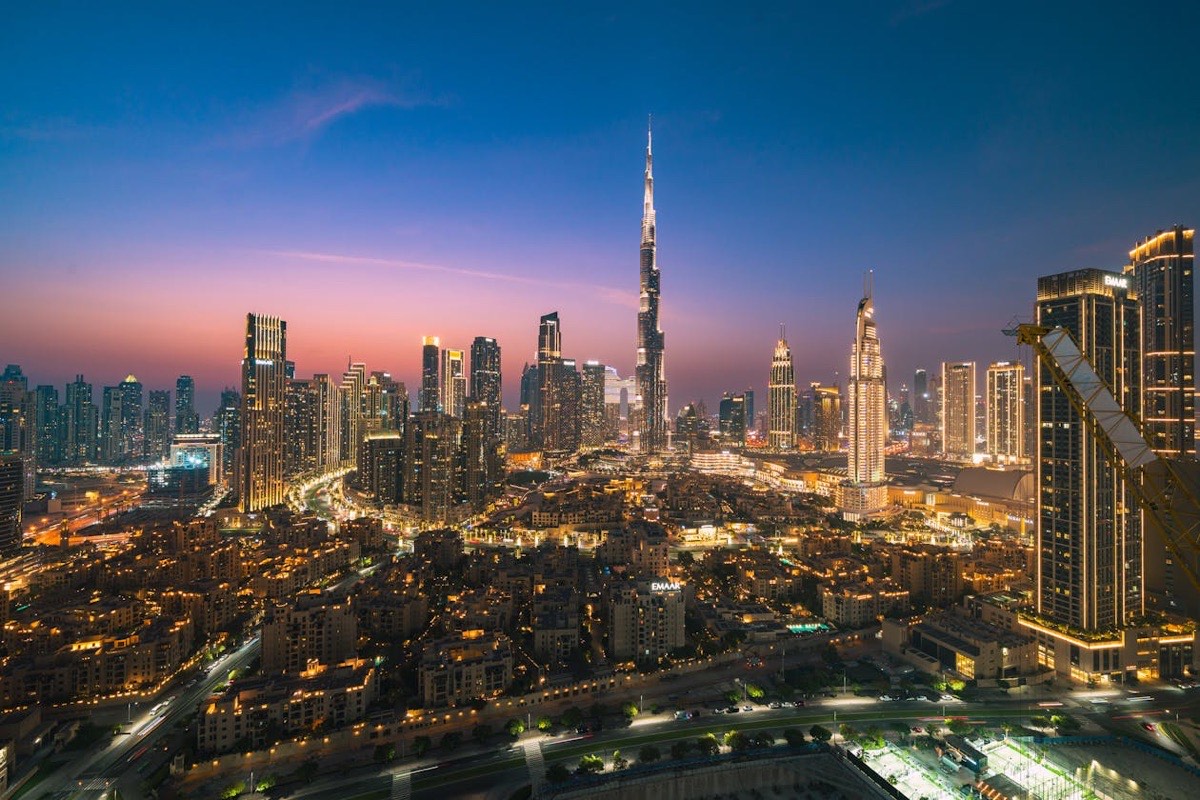
Two of the world's premier destinations for high-net-worth individuals and international professionals couldn't appear more different at first glance. Switzerland offers Alpine peaks, precision engineering, and centuries-old banking traditions. The UAE presents desert modernity, tax-free income, and relentless sunshine. Yet both compete vigorously for the same pool of globally mobile talent and wealth.
For professionals and families weighing these destinations, the cost comparison extends far beyond simple price lists. Yes, Switzerland costs roughly 55% more for daily expenses than Dubai, but the UAE's zero income tax versus Switzerland's 22-35% rate fundamentally alters the equation. Factor in climate, education systems, residency pathways, and long-term stability, and the decision becomes considerably more complex.
This comprehensive analysis examines the complete financial and lifestyle picture for both destinations, helping you determine which better serves your specific circumstances and priorities.
Quick Cost Comparison Overview
Switzerland maintains significantly higher day-to-day costs than the UAE, but the tax differential creates surprising net income outcomes.
| Category | Switzerland (CHF) | UAE (AED) | Difference |
|---|---|---|---|
| Single Person Monthly | 2,569 (with rent) | 1,850 | +39% |
| Family of Four Monthly | 6,605 (with rent) | 4,200 | +57% |
| 1-Bed City Centre Rent | 2,200-3,000 | 1,100-1,500 | +80-100% |
| 3-Bed Villa/Apartment | 4,000-5,500 | 2,200-3,500 | +50-70% |
| International School | 25,000-35,000/year | 18,000-30,000/year | +20-40% |
| Meal at Restaurant | 25-35 | 12-18 | +100% |
| Petrol (Litre) | 1.79 | 0.75 | +139% |
| Income Tax Rate | 22-35% | 0% | Infinite |
Exchange rate: 1 CHF ≈ 4.0 AED. All costs in respective local currencies unless specified.
The Tax Question: Zero vs Low
This single factor dominates the financial comparison and often determines the optimal choice.
UAE's Zero Income Tax
The UAE levies no personal income tax whatsoever. Your salary is your salary - what you earn, you keep. For a professional earning AED 500,000 (CHF 125,000 / £111,000), every dirham reaches your bank account aside from minimal social security contributions (if you're an Emirati national).
This tax-free status extends to:
- Capital gains (no tax)
- Investment income (no tax)
- Rental income (no tax)
- Inheritance (no tax)
- Worldwide income for residents (no tax)
The only consumption tax: 5% VAT on most goods and services, implemented in 2018 and still amongst the world's lowest.
Swiss Low-But-Not-Zero Tax
Switzerland's reputation as a tax haven proves somewhat exaggerated for ordinary professionals, though still favourable compared to most developed nations. The three-tier system (federal, cantonal, municipal) creates variation:
For a professional earning CHF 120,000 in Zürich:
- Federal tax: ~CHF 3,500 (3%)
- Cantonal/municipal: ~CHF 19,000 (16%)
- Social security: ~CHF 7,800 (6.5%)
- Total: ~CHF 30,300 (25.25%)
- Net: CHF 89,700
Same income in Zug (lowest-tax canton):
- Total effective rate: ~22%
- Net: CHF 93,600
Same income in Geneva (high-tax canton):
- Total effective rate: ~32%
- Net: CHF 81,600
For ultra-high-net-worth individuals, Switzerland offers lump-sum taxation (Pauschalbesteuerung), where qualifying foreigners pay tax based on living expenses rather than worldwide income - an entirely different calculation that can prove extremely favourable for the very wealthy.
Housing: Desert Modernity vs Alpine Tradition
Both markets cater to international professionals but with strikingly different characteristics.
Dubai Housing Market
Dubai's property market offers stunning modern apartments and spacious villas at prices that seem reasonable compared to global gateway cities. A well-appointed one-bedroom apartment in Dubai Marina or Downtown Dubai costs AED 4,500-6,000 monthly (CHF 1,125-1,500), whilst similar quality in Zürich demands CHF 2,200-3,000.
Families favour villa compounds in areas like Arabian Ranches or Dubai Hills Estate, where three-bedroom villas with gardens and pools rent for AED 120,000-180,000 annually (CHF 30,000-45,000). Comparable family housing in Zürich suburbs costs CHF 48,000-66,000 annually.
Dubai's rental market moves quickly and flexibly. Properties are typically unfurnished, and whilst quality construction varies enormously (view everything carefully before signing), the best developments rival luxury anywhere globally.
Swiss Housing Reality
Swiss rental housing maintains exceptional standards but at premium prices. That Zürich one-bedroom flat costing CHF 2,400-2,800 monthly includes features Dubai developers consider luxury upgrades: triple glazing, superior insulation, basement storage, bike rooms, and meticulously maintained common areas.
Swiss tenancy law strongly favours tenants. Rent increases face strict controls, long-term security is the norm, and evictions prove extremely difficult for landlords. This stability comes paired with rigidity - finding pet-friendly flats challenges many, and customisation requires landlord approval.
Geneva and Zürich command highest rents, whilst Basel and Bern offer 15-20% savings. True bargains exist in smaller cities and rural areas, but these locations may lack international community and career opportunities that attract most expats.
Food and Dining: Where Dubai Wins Clearly
Daily living costs prove substantially cheaper in Dubai, particularly for dining and entertainment.
Grocery Shopping
Dubai supermarkets offer international products at moderate prices. A weekly shop for a single person costs AED 250-400 (CHF 63-100) versus CHF 100-150 in Switzerland. Specific comparisons:
- Chicken breast (1kg): AED 22 vs CHF 28 (27% more expensive in Switzerland)
- Fresh salmon (1kg): AED 50 vs CHF 38 (24% cheaper in Switzerland - rare win)
- Milk (1L): AED 6 vs CHF 1.60 (assuming local vs imported brands)
- Fresh bread: AED 8 vs CHF 3.50 (Swiss bread cheaper and better)
Dubai's multicultural population means exceptional variety. Indian, Pakistani, Filipino, European, and Middle Eastern grocers offer authentic ingredients at reasonable prices - something Switzerland's smaller immigrant communities can't match.
Dining and Entertainment
This category reveals Dubai's strongest cost advantage. A quality lunch in Business Bay or DIFC costs AED 50-70 (CHF 12.50-17.50), whilst Zürich's equivalent demands CHF 25-35. Evening fine dining:
- Dubai mid-range restaurant: AED 250-350 per person (CHF 63-88)
- Zürich mid-range restaurant: CHF 60-85 per person
Dubai's entertainment and dining scene offers extraordinary value for money. Excellent restaurants span all price points, whilst Switzerland's dining skews mid-to-premium with limited budget options.
Climate: Sunshine vs Seasons
Non-financial but crucial for quality of life, climate preferences strongly influence destination choice.
UAE's Relentless Heat
Dubai delivers sunshine 350+ days annually, with summer temperatures regularly exceeding 45°C (113°F). This creates a peculiar lifestyle: November-March feels glorious, April and October prove warm but manageable, and May-September drives everyone indoors during daylight hours.
Air conditioning costs dominate summer utility bills - AED 800-1,500 monthly (CHF 200-375) during peak summer for apartments, more for villas. The climate enables year-round beach and outdoor pool activities but eliminates hiking, skiing, and many outdoor pursuits Britons and Europeans take for granted.
Swiss Four Seasons
Switzerland delivers proper seasons: snowy winters ideal for skiing, warm summers perfect for hiking, and stunning spring and autumn transitions. This seasonal variation appeals to those who find endless summer monotonous.
The downside: grey, damp winters in lower elevations can feel oppressive, particularly for those from sunnier climates. Zürich averages just 1,566 sunshine hours annually versus Dubai's 3,500+. Seasonal Affective Disorder affects many expats, particularly during November-February.
However, Switzerland's climate enables activities impossible in Dubai: proper hiking in flower-filled Alpine meadows, world-class skiing 90 minutes from major cities, cycling through varied landscapes, and generally being outdoors comfortably year-round except during weather extremes.
Education: Quality at Premium Prices
Both destinations offer excellent international education, though at substantial cost.
Swiss International Schools
Switzerland hosts world-renowned international schools, though "free" public school isn't realistically accessible for most expat children without local language fluency. Annual international school costs:
- Primary: CHF 20,000-30,000
- Secondary: CHF 25,000-35,000
- IB Diploma years: CHF 30,000-40,000
Swiss international schools typically maintain smaller class sizes, rigorous academics, and emphasis on outdoor education and experiential learning. The country's central European location enables school trips across the continent - a unique advantage.
UAE International School Market
Dubai and Abu Dhabi boast dozens of international schools following British, American, IB, and other curricula. Annual costs:
- Primary: AED 45,000-75,000 (CHF 11,250-18,750)
- Secondary: AED 55,000-85,000 (CHF 13,750-21,250)
- IB Diploma: AED 70,000-95,000 (CHF 17,500-23,750)
Whilst cheaper than Switzerland in absolute terms, Dubai schools vary enormously in quality. The best (GEMS Wellington, Dubai College, JESS) rival Swiss schools; others deliver adequate but unremarkable education. Research thoroughly.
One advantage: many UAE employers offer education allowances covering partial or full school fees, something Swiss employers rarely provide.
Healthcare: Insurance Models
Both countries require private health insurance, though the systems differ significantly.
Swiss Healthcare
Mandatory basic insurance (Grundversicherung) costs CHF 350-500 monthly per adult, with children's coverage around CHF 100-150 monthly. This provides comprehensive coverage through Switzerland's excellent healthcare system, though deductibles (CHF 300-2,500 annually) and 10% co-pays apply.
Swiss healthcare quality ranks amongst the world's best. No waiting lists, cutting-edge facilities, English-speaking doctors in major cities, and comprehensive coverage create peace of mind worth paying for.
UAE Healthcare
Dubai requires employer-provided health insurance for all employees and their dependants under the Dubai Health Authority (DHA) regulations. Quality and coverage vary dramatically by employer and plan tier.
Premium private plans cost AED 15,000-25,000 annually (CHF 3,750-6,250) per adult, providing access to excellent hospitals like American Hospital Dubai or Mediclinic. Basic employer plans may cover only limited providers with co-pays and exclusions.
Dubai's best healthcare facilities rival Switzerland's, but the system's quality varies more widely. Navigate carefully and understand your coverage thoroughly.
Transport and Mobility
Vastly different infrastructure philosophies create opposite experiences.
Swiss Public Transport Excellence
Switzerland's integrated public transport network ranks amongst the world's finest. Monthly passes (CHF 80-170 depending on zones) grant unlimited access to trains, trams, buses, and boats. Car ownership proves optional for most Swiss residents, with comprehensive public transport rendering vehicles unnecessary.
For those who drive, Switzerland maintains immaculately maintained roads but high fuel costs (CHF 1.79/litre) and expensive urban parking (CHF 3-6 hourly). The small size means Geneva to Zürich takes 2.5 hours by train, making domestic travel easy and car-free.
Dubai's Car Culture
Dubai essentially requires car ownership. Whilst the Metro serves some areas well, the sprawling city's layout demands vehicles for practical daily living. Petrol costs just AED 2.95/litre (CHF 0.74) - less than half Swiss prices - whilst parking remains free or cheap in most locations.
New car prices run lower than Europe, and no annual road tax exists (though registration and insurance cost AED 3,000-8,000 annually depending on vehicle). Traffic congestion during peak hours proves frustrating, but smooth roads and cheap fuel make driving generally pleasant.
Residency and Long-Term Stability
Different pathways and different levels of permanence.
Swiss Residency
EU/EFTA nationals enjoy freedom of movement (though Britain's Brexit status complicates this). Non-EU nationals require employer sponsorship and work permits, with highly skilled professionals generally finding approval.
After 10 years (5 in some cases), permanent residence ("C Permit") becomes available. Citizenship requires 10-12 years residence plus language proficiency and integration requirements. Switzerland offers genuine long-term stability and eventual naturalisation pathways.
UAE Residency
UAE residence ties directly to employment or property ownership. Employment-sponsored residence visas require renewal every 2-3 years, whilst property investors (AED 750,000+ purchase) qualify for long-term visas.
Recent golden visa programmes (10-year visas for investors, specialists, and certain professionals) improve stability, but ultimately, UAE residence remains contingent. No pathway to citizenship exists for most foreigners, meaning indefinite residence but never "belonging" in the fullest sense.
This fundamentally differs from Switzerland's eventual naturalisation pathway, particularly important for families with children who may wish to establish permanent roots.
Real-World Budget Comparison
Single Professional
Dubai:
- Rent (1-bed, Marina): AED 5,000 (CHF 1,250)
- Health insurance: AED 0 (employer-provided)
- Food: AED 1,200 (CHF 300)
- Transport (car): AED 1,000 (CHF 250)
- Misc: AED 1,500 (CHF 375)
- Total: AED 8,700 (CHF 2,175)
Zürich:
- Rent (1-bed): CHF 2,400
- Health insurance: CHF 380
- Food: CHF 600
- Transport: CHF 82
- Misc: CHF 400
- Total: CHF 3,862
Zürich costs 78% more monthly, but comparing net incomes reveals a different picture.
Professional earning AED 450,000 (CHF 112,500) in Dubai:
- Tax: AED 0
- Net: AED 450,000 (CHF 112,500)
- Annual living costs: AED 104,400 (CHF 26,100)
- Remaining: AED 345,600 (CHF 86,400)
Professional earning CHF 120,000 in Zürich:
- Tax/social: CHF 30,300 (25%)
- Net: CHF 89,700
- Annual living costs: CHF 46,344
- Remaining: CHF 43,356
The Dubai professional retains double the disposable income despite higher gross costs in Switzerland!
Family of Four
Dubai (villa, 2 children):
- Rent (3-bed villa): AED 140,000/year (CHF 35,000)
- School fees (×2): AED 120,000/year (CHF 30,000)
- Health insurance (family): AED 0 (employer-provided)
- Food: AED 3,500/month (CHF 10,500/year)
- Transport (2 cars): AED 2,500/month (CHF 7,500/year)
- Misc: AED 3,000/month (CHF 9,000/year)
- Total: AED 302,000/year (CHF 75,500/year)
Zürich (family, 2 children):
- Rent (4-bed): CHF 4,500/month (CHF 54,000/year)
- School fees (×2): CHF 50,000/year
- Health insurance (×4): CHF 1,200/month (CHF 14,400/year)
- Food: CHF 1,500/month (CHF 18,000/year)
- Transport: CHF 250/month (CHF 3,000/year)
- Misc: CHF 800/month (CHF 9,600/year)
- Total: CHF 149,000/year
For families, Switzerland costs roughly double Dubai's expenses, and the tax differential makes Dubai dramatically more attractive financially for high earners.
Lifestyle and Quality of Life
Beyond numbers, quality of life factors profoundly influence satisfaction.
Switzerland's Advantages
- Political stability: Centuries-old democracy, neutral foreign policy, predictable governance
- Natural beauty: Spectacular Alpine scenery, immediate outdoor access, hiking and skiing on doorstep
- Cultural richness: World-class museums, opera, theatre, and arts scene
- European integration: Easy travel to dozens of countries within 2 hours
- Work-life balance: Strong labour protections, generous holiday, reasonable working hours
- Long-term belonging: Pathway to citizenship and permanent integration
UAE's Advantages
- Sunshine and warmth: Year-round warm weather for those who love heat
- Tax efficiency: Zero income tax maximises disposable income
- Modern infrastructure: Brand-new everything, latest technology, ambitious development
- International community: Truly global population with easy integration for expats
- Convenience: 24/7 lifestyle, everything delivered, car-centric ease
- Asian proximity: Gateway to India, Southeast Asia, Far East
FAQ: Switzerland vs UAE Cost of Living
Which is actually cheaper overall?
UAE costs 40-55% less for daily living expenses, but Switzerland's comparison depends on your income level. For professionals earning CHF 80,000-120,000, the UAE's zero income tax advantage often exceeds Switzerland's cost premium. Above CHF 150,000+, UAE's financial advantage grows dramatically. Below CHF 80,000, UAE still wins but less convincingly.
For families with children, which offers better value?
This depends on employer education benefits and total household income. If your UAE employer covers school fees (common for senior positions), UAE delivers far superior value. If you pay school fees yourself, Switzerland's lower education costs and excellent public schooling options (if children learn the local language) can compete. For very high-earning families (CHF 200,000+ combined), UAE's tax benefits typically outweigh all other factors.
How do quality of life factors compare?
Switzerland offers superior political stability, natural beauty, European cultural richness, and eventual citizenship pathways. UAE provides zero tax, constant sunshine, modern convenience, and Asian connectivity. Switzerland suits those prioritising long-term stability, outdoor lifestyle, and European integration. UAE attracts those maximising financial efficiency, loving warmth, and valuing modern convenience over European tradition.
What about long-term wealth building?
UAE's zero income tax and zero capital gains tax create powerful wealth-building advantages for high earners and investors. A professional saving AED 300,000 annually tax-free compounds wealth faster than a Swiss counterpart saving CHF 50,000 after tax. However, Switzerland's political stability, currency strength (CHF), and robust pension system provide different security. Your horizon matters: 5-10 years favours UAE financially; lifetime residency favours Switzerland for stability.
Which has better career prospects?
Switzerland excels for finance (banking, wealth management), pharmaceuticals, luxury goods, and international organisations. UAE dominates for real estate, hospitality, logistics, and increasingly tech/startups. Switzerland offers genuine career development and training; UAE prioritises execution and delivery. Switzerland provides longer-term career security; UAE offers higher short-term earnings potential but less job security.
Conclusion: Two Tax Havens, Different Appeals
Switzerland and the UAE occupy similar niches in the global mobility market: stable, low-tax jurisdictions attracting international talent and wealth. Yet they deliver profoundly different experiences.
The numbers favour UAE for pure financial optimisation, particularly for high earners. Zero income tax versus Switzerland's 22-35% creates overwhelming advantage for professionals earning CHF 120,000+. Combined with lower living costs, Dubai enables saving rates Swiss residents simply cannot match on equivalent gross incomes.
However, Switzerland's advantages extend beyond spreadsheets. Political stability spanning centuries, spectacular natural beauty, rich cultural tradition, excellent public services, and eventual pathways to citizenship and belonging create intangible value many prioritise over tax efficiency.
The ideal UAE profile: High earners maximising wealth accumulation (5-15 year horizon), sun and warmth lovers, those comfortable with indefinite expatriate status, families with employer-covered education, convenience and modernity advocates, and individuals building businesses or careers with Asian focus.
The ideal Switzerland profile: Long-term stability seekers, outdoor lifestyle enthusiasts, families prioritising education quality and European culture, professionals in Swiss-strength sectors (finance, pharma, engineering), individuals valuing work-life balance and Alpine beauty, and those wanting eventual citizenship and permanent belonging.
For many professionals, the optimal strategy combines both: build wealth rapidly in the UAE during high-earning years (30s-40s), then transition to Switzerland for quality of life, stability, and European lifestyle whilst enjoying the accumulated tax-free wealth.
Ultimately, your choice depends on whether you prioritise maximum financial efficiency (UAE) or comprehensive quality of life with long-term stability (Switzerland). Both deliver what they promise; which matters more depends entirely on your personal circumstances, career stage, and life priorities.
Exploring Swiss relocation from Dubai? Review our complete moving guide, compare Swiss residence permit requirements, or schedule a consultation to discuss your specific transition with our UAE-to-Switzerland relocation specialists.
Sources: Cost of living data from Numbeo Zurich-Dubai Comparison and Expatistan. Tax information from Swiss Federal Tax Administration, Dubai Statistics Centre, and PwC Tax Guides. Education costs from leading international schools in both countries. Healthcare data from Dubai Health Authority and Swiss Federal Office of Public Health. Salary and employment data from Swiss Federal Statistical Office and UAE Ministry of Labour statistics. All figures current as of January 2026.